


News
CenterPoint Announces FY2027 Promotions
Search Site
Back to Menu
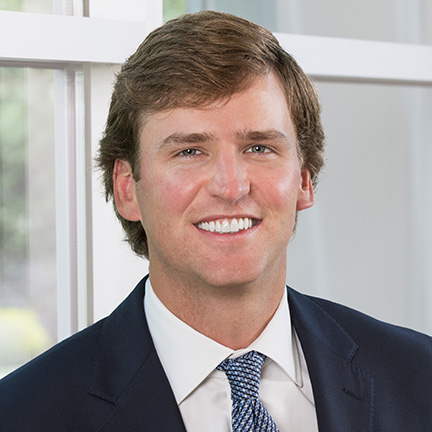
"In the Central Region, our tenants, our real estate, and our income are not so dependent on inventory flowing through the ports. We’re serving customers that serve local populations in Chicago, Dallas, Houston, and Austin, which is the real key to why we’re seeing stronger performance there."
- Jeff Thornton, CenterPoint's EVP, Central Region
JOC talks with industrial real estate experts as the sector rebalances as tariffs, AI, evolving supply chains reshape demand.
As a longtime sponsor and partner of the JOC, our EVP and Head of Central Region, Jeff Thornton, was asked to join a counterpart from Rockefeller Group, EVP Brandi Hanback, to discuss what they’re seeing on the ground now and on the horizon for the industrial real estate sector amid shifting tenant needs and economic instability in “Resetting priorities: Industrial real estate sector rebalances as tariffs, AI, evolving supply chains reshape demand.”
The US industrial real estate sector is experiencing a mid-cycle recalibration. Following a period of unprecedented market stressors created by tariff volatility and shifting trade policies, the market is more resilient than expected.
“We’re experiencing increased demand and leasing activity in the first half of 2026 as compared to 2025 or 2024, as tenants have adjusted to the new normal and tariff policy has been less volatile,” said Brandi Hanback, executive vice president, head of development, and head of FTZ, Trade & Logistics at Rockefeller Group, a major private real estate developer, owner and investor based in New York City. “We’re also seeing a steady increase in site tours of our projects across the country, as well as in requests for proposals.”
While the market is improving, data from investment management firm Colliers shows a massive 63% drop in national industrial construction pipeline volume since peaking in late 2022. However, the slowdown is paving the way for a healthier supply-and-demand balance. Fueled in part by the rapid rise of AI, shifting supply chains and nearshoring, market leaders are finding robust pockets of growth across the country.
Despite these positive indicators, ongoing uncertainty around tariffs and broader economic conditions continues to influence where developers invest and where tenants choose to lease.
“The choppiness in the industrial sector, especially since the spring of 2025, doesn’t appear to be going away any time soon,” said Jeff Thornton, executive vice president and head of the Central region at CenterPoint Properties, a national industrial real estate owner and developer based in Oak Brook, Ill.
“Owners and developers are being forced to operate under the assumption that there’s going to be continued uncertainty around tariffs, and tenants’ total occupancy cost will be uncertain and likely elevated for the foreseeable future.”
Tariff policy continues to create unpredictability for importers and logistics operators, affecting warehouse leasing decisions, site selection and inventory strategies in major port markets. As companies seek to manage costs and remain agile, many are turning to third-party logistics providers (3PLs) rather than committing to long-term real estate strategies.
In fact, 3PLs are projected to account for more than 35% of leasing activity this year as more companies outsource distribution to achieve shorter lease terms and flexible footprints to offset tariff-related costs, according to CBRE’s 2026 Industrial Outlook.
Thornton noted that larger, established brand-name companies have become less inclined to commit to long-term leases. Instead, they’re outsourcing more to 3PLs, which have been seeking shorter-term leases. This gives them the flexibility to scale their space up or down as dictated by their contracts with consumer products companies.
“There will probably be some continued re-trading of rents and leases, particularly on the coasts,” Thornton said. “The uncertainty from a macroeconomic standpoint in the US and from a geopolitical standpoint around the world is affecting coastal markets more than non-coastal markets close to major population centers.”
Thornton added that CenterPoint’s larger buildings and stronger credit tenants in the Central US have continued to perform well because the company’s portfolio has long focused on serving local and regional population centers rather than relying heavily on inventory flowing through major ports.
“That’s the real key to why we’re seeing stronger performance there,” he said. “Alternatively, there’s solid rent growth in our tier-one Central Region markets, particularly Chicago, Houston, Dallas and Austin.” Thornton also noted that rents have continued to rise, while some coastal markets have seen rent declines.
While coastal uncertainty is real, some gateway markets are already rebounding, and savvy developers are deploying specialized trade strategies to help occupiers offset high tariff costs.
“Absorption in the Northeast and Southern California, including the Inland Empire, has improved,” Hanback said. “New construction starts have halted significantly, which is setting the stage for a reduced supply, especially in the new construction of bulk space modern distribution buildings.”
Foreign Trade Zones (FTZs) can help tenants protect their cash flow and reduce tax burdens amid volatile tariff policies. Rockefeller Group operates an FTZ consultancy that assists businesses through the FTZ designation or activation process.
“The financial advantages of operating in an FTZ can drive significant savings, especially in this changing tariff and trade environment, and can help businesses preserve cash flow and offset costs associated with relocation,” said Hanback, who notes that since the new tariff and trade policies have come into effect, the business has seen a significant spike in companies asking for help.
Most Rockefeller Group projects are considered “FTZ-enabled,” meaning they’re located in the service area of an existing FTZ project sponsored by an existing grantee, allowing for a simplified, faster FTZ designation application process.
Even though many tenants are cutting costs and reducing their overall square footage, they are spending more to relocate to premium buildings with modern infrastructure. Older industrial space is returning to the market quickly, as indicated by more than 100 million square feet of negative absorption in pre-2020 buildings in 2025, according to CBRE’s 2026 Industrial Outlook.
As companies review their real estate footprints, many are opting for higher-quality facilities with automation and scalability rather than shopping on price alone.
Since new construction has stalled, national lease renewals have jumped to an all-time high of 35% of total market volume, up from the historical average of 24%, as tenants watch new spaces disappear, CBRE reports.
In addition, despite a migration to quality, speculative development will be minimal in 2026 due to an oversupply of empty first-generation space and challenges in securing construction financing. However, build-to-suit development will likely increase to meet occupiers’ specialized requirements.
“Construction cooling has been somewhat of a good thing for the health of our industrial markets,” Thornton said. “There were several overbuilt markets as we came to the end of the last development cycle, and this ‘breather’ is allowing markets to recover and absorb excess space. As a result, large spaces, particularly those of 1 million square feet or more, are becoming difficult to find.”
The shift is creating opportunities for build-to-suit Class A bulk distribution projects.
“However, the same opportunity doesn’t exist for small to medium-sized buildings, because there are still a lot of buildings in that size range available throughout the country,” Thornton said. He expects heightened interest from million-square-foot tenants in build-to-suits.
While this supply crunch clears a path for massive projects, markets are recovering at different rates.
“The supply cliff is real, but there’s still hangover supply from the last cycle in key markets,” said Hanback, noting that Rockefeller Group monitors markets continuously to look for a healthy balance between sustained demand and constrained supply.
The rapid expansion of AI is creating new demand across the industrial real estate market. Worldwide, a 2026 JLL Research outlook shows that the global data center sector is experiencing an unprecedented infrastructure investment cycle that will require up to $3 trillion by 2030, doubling global capacity.
Currently, the US has more than 4,000 active data centers, with another 3,000 facilities planned or under development to support AI workloads, according to an analysis by the American Edge Project and the Technology Councils of North America, reported by Axios.
“Data center and ancillary uses are compounding demand for industrial space in addition to increased demand from manufacturers, 3PLs and traditional distributors,” Hanback said. “This puts a strain on infrastructure and limits the number of sites that can be successfully developed for a multitude of industrial purposes.”
Data from CBRE shows that the race for AI infrastructure has driven primary market data center vacancy to an all-time low of 1.4%, contributing to spillover demand in traditional industrial real estate. At least 36 US states are offering incentives for data center development to attract AI infrastructure.
“We’re seeing a lot of ‘data center-adjacent’ users occupying our warehouse space not to produce data centers, but to stock supplies for data centers, such as racking and wiring,” Thornton said. “Because there’s so much data center development happening nationally right now, these adjacent users are leasing our buildings and are willing to pay strong rent rates so that they can seize upon the data center boom.”
Data center development is also increasing the value of properties located near major power infrastructure.
“That results in an increase in the value of even older properties if they’re close to heavy power,” Thornton said, noting that because CenterPoint has been heavily focused on investing in infill inventory for the long term, its portfolio is rich in inventory adjacent to heavy power infrastructure.
While some traditional coastal gateways are adjusting, population growth, logistics infrastructure and company investments are creating opportunities in the Sun Belt and secondary markets.
CBRE reports that the available labor pool and demand for more power sources will drive demand in the Midwest, mid-Atlantic and Southeast. The most attractive markets for occupier expansions — specifically manufacturing operations — include Louisville, Nashville, Cincinnati, Chicago, Detroit and Kansas City. CenterPoint has expanded its investment activity in key markets such as Houston, Dallas and South Florida.
“We also just entered the San Diego market in 2024 and are working on more investment opportunities in California. [We’ve] closed five Class A investments in Atlanta since entering that market [in Q2 2025],” Thornton said.
Rockefeller Group has expanded from a Northeast-focused industrial platform to a national development platform with active speculative projects across approximately 11 states and seven regions, with about 13 million square feet of industrial development underway or recently completed.
While fundamentals are resetting in some traditional gateway markets, Hanback is seeing strong momentum in infill areas, driven by economic growth and demographics.
“These areas include Dallas, Houston, Phoenix and Atlanta, as well as strategic secondary markets such as Norfolk, Greenville and Seattle,” she said.
Hanback also pointed to the Port of Virginia as a growing area of activity, with strong occupier demand.
“South Carolina and Georgia continue to generate consistent leasing activity and investment,” she said.
“Markets that Rockefeller Group has entered or evaluated in recent years that are showing signs of growth are the Pacific Northwest and Texas.”
Tertiary markets like Reno, Nev., and Abilene, TX, have development pipelines that could outpace those of some primary markets, such as Hillsboro, Ore., or Silicon Valley, in 2026, CBRE said.
Occupiers are increasingly using AI and diversifying sourcing, including turning to domestic manufacturers, according to CBRE. Instead of making permanent location changes, many companies are adding more flexibility into their logistics networks through outsourcing, varied sourcing and shorter leases.
Hanback views the trend differently. “I wouldn’t characterize industrial location trends in terms of a shift, but rather an evolution to build out supply chains for resilience, last-mile delivery and long-term growth and expansion,” she said.
The industrial real estate market is stabilizing, but a full recovery remains uneven as tariffs, interest rates, consumer spending and evolving supply chains shape demand.
“As we experience inquiries and tours converting to LOIs [letters of intent] and leases, it’s a cause for optimism along with oversupplied markets moving back toward balance,” Hanback said. “Interest rates and consumer spending are reasons for caution and active monitoring, as we see companies continuing to be cost-conscious. At times, there’s a disconnect between what the operations side within companies prioritizes to be productive compared to what finance prioritizes to manage costs.”
However, while challenges remain, the industrial real estate sector continues to stabilize after the overbuilding and volatility of the last few years. Occupiers, developers and investors are adapting to uncertainty using strategies such as 3PLs, shorter leases and diversified supply chains. As demand shifts toward higher-quality, specialized facilities, AI and data center growth are creating new opportunities for development and investment.
Published with permission by Journal of Commerce by S&P Global as part of a special advertising section.
For CenterPoint Investment, Development, and Asset Management inquiries in the Central Region, please contact:
Subscribe
Microsite Request