News
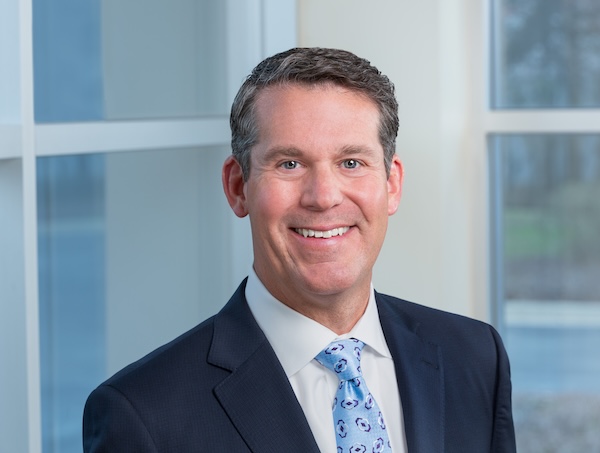
EVP Jeff Thornton to Transwestern Audience: ‘Opportunity Lives Amid Market Volatility’
Search Site
Back to Menu
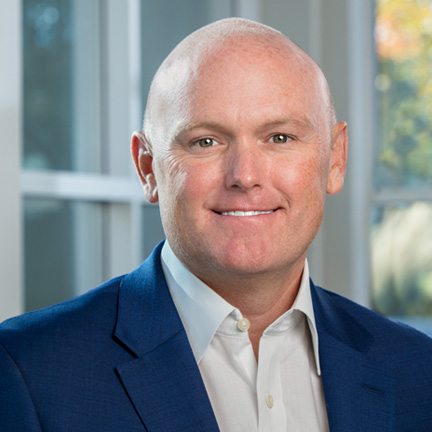
"We empower our local market experts to operate as frictionlessly as possible, nimbly serve our customers, and make deals quickly to provide favorable outcomes for our partners."
- Jonathan Guffey, CenterPoint's East Region VP of Leasing
Guffey highlights CenterPoint’s focus on proactive customer partnerships, local market agility, and long-term strategic planning amid challenging economic headwinds in South Florida.
Invest: Greater Fort Lauderdale spoke with Jonathan Guffey, CenterPoint’s Vice President of Leasing in the East Region, about how South Florida’s industrial real estate market is evolving amid tariff pressures, supply chain dynamics, and limited land availability. With nearly 5 million square feet under management in the region, Guffey discussed his team’s long-term vision and consistent activity, underscoring CenterPoint’s commitment to staying ahead of customer needs in a fast-moving environment.
Over the past 12 months, tariffs have been the most significant factor reshaping our conversations with customers. My focus is on asset management and leasing for the Southeast U.S., including South Florida. My role allows a clear view of how changes ripple through various businesses and supply chains. When the potential impact of tariffs started to come into focus, our first instinct was to sit down with every customer and understand how their operations might be impacted.
What surprised us was how strategically proactive many customers had been in the months leading up to Liberation Day. Everyone has been affected to some degree, but the level of preparation we saw meant our customers were better positioned than we initially expected. For us, it reinforced the value of staying close to our customers and being ready to pivot alongside them as conditions change.
To understand customer behavior today, it’s necessary to revisit the COVID period when there was a rush to secure space as quickly as possible. Many companies decided it was better to take space and figure out how to use it later.
Over the last 12 to 24 months, we’ve started to see a reset. Instead of expanding at all costs, customers are right sizing their operations. That does not necessarily mean handing space back, but it does mean being more deliberate about what they hold onto and where they are located. Some users are downsizing slightly, while others are moving into more functional buildings that better align with their operations or turning to third-party logistics partners to manage certain portions of their operations more efficiently.
In South Florida, that right sizing is happening against a backdrop of high demand and limited supply. We are obviously land-constrained, with approximately 17 miles separating the Everglades from the ocean, so there is only a limited amount of developable land available. At the same time, population growth continues to drive consumption. That combination keeps fundamentals strong and supports a steady level of demand for well-located, functional industrial space.
Lease negotiations have evolved significantly over the last several years. Early in the pandemic, some of the most challenging conversations we had in the industry were about basic survival as companies tried to decide whether they could pay rent and still keep their people employed. As the market recovered and rents escalated, we entered a different phase where lease renewals and new deals often meant rents doubling or even tripling compared to pre-2019 levels.
We are now at a point where many of those three- and five-year agreements are rolling into a new environment of higher rents and operating costs. Those are not easy conversations, particularly for customers who were substantially below market. The key for us is to approach them as a long-term real estate partner, not just as an owner seeking to maximize rent on a single transaction.
That means being transparent, starting discussions early, and listening carefully to what customers need from both a cost and operational standpoint. Sometimes, that involves creative structures or exploring ways to grow with a customer over time. We always want to achieve appropriate returns, but we are equally focused on building durable customer and broker relationships.
Tourism and trade remain at the core of demand in South Florida. The region’s cruise lines, ports, and airports all drive significant logistics activity, and many of our users sit within or adjacent to those ecosystems. A large volume of product tied to hospitality, retail, and food service flows through Port Everglades and related infrastructure before moving into the broader U.S. market.
Housing and residential construction are another major driver. All the trades that support that activity, from plumbing and electrical to flooring and finishes, need warehouse, distribution, and light manufacturing space. Further west, in locations such as Miramar, you also see clusters tied to aviation, marine and related industries. When you put it together, the same attributes that draw people to South Florida as a destination — its climate, quality of life, and connectivity — also underpin a diverse and resilient base of industrial users.
Sustainability has become a more prominent part of the conversation, particularly among larger corporate users focused on ESG goals and reporting. As a long-term owner, we never want to be reactionary in that space. Our approach is to be proactive, stay ahead of evolving expectations, and integrate sustainability into how we invest and operate.
CenterPoint has a dedicated sustainability team and a nimble structure that allows regional and local teams to bring market-specific insights back to the home office. That feedback loop helps us shape strategies around energy efficiency, building performance, and resiliency measures that make sense for both our customers and the South Florida environment.
The priority is to stay forward-thinking and constantly in motion. Someone once told me that in this business, you have to be like a shark — if you are not swimming, you are dying — and that mindset applies both to how we manage the portfolio and how we support our customers.
We have created an internal structure that keeps us in front of customers as much as possible, allowing us to better understand how they operate and where their needs are headed. Success for us is being able to anticipate those needs before the customer even raises them. Anticipating needs builds trust, and trust is the foundation of long-term relationships.
Technology and data will play an increasingly important role in that effort. Whether it is how we design and develop buildings, how we track and analyze portfolio performance, or how we identify solutions for specific customer pain points, tools such as those emerging in the AI space make us more efficient and responsive. The key is to leverage technology to strengthen, not replace, human relationships.
One distinguishing factor for CenterPoint is that we empower our local market experts to operate as frictionlessly as possible, nimbly serve our customers and make deals quickly to provide favorable outcomes for our partners. This is a fast-moving business, and time kills deals. Customers are counting on us to respond quickly and make informed decisions, and that requires empowering people on the ground who know the market intimately.
By pushing authority closer to the local level and digging deeper into each market we serve, we can react more quickly and tailor solutions to the realities on the ground. That local focus, combined with the scale and resources of a national platform, enables us to continue growing in South Florida while helping our customers navigate an increasingly complex environment.
Read the full Invest: Greater Fort Lauderdale 2026 report.
For CenterPoint East Region Development, Investment, and Asset Management Inquiries, please contact:
Subscribe
Microsite Request