Please update your browser.

Thank you for visiting our site! We noticed you are using a browser we no longer support. To have the best overall experience and avoid issues navigating the site, please click one of the supported browsers to the right to download the latest version for free:

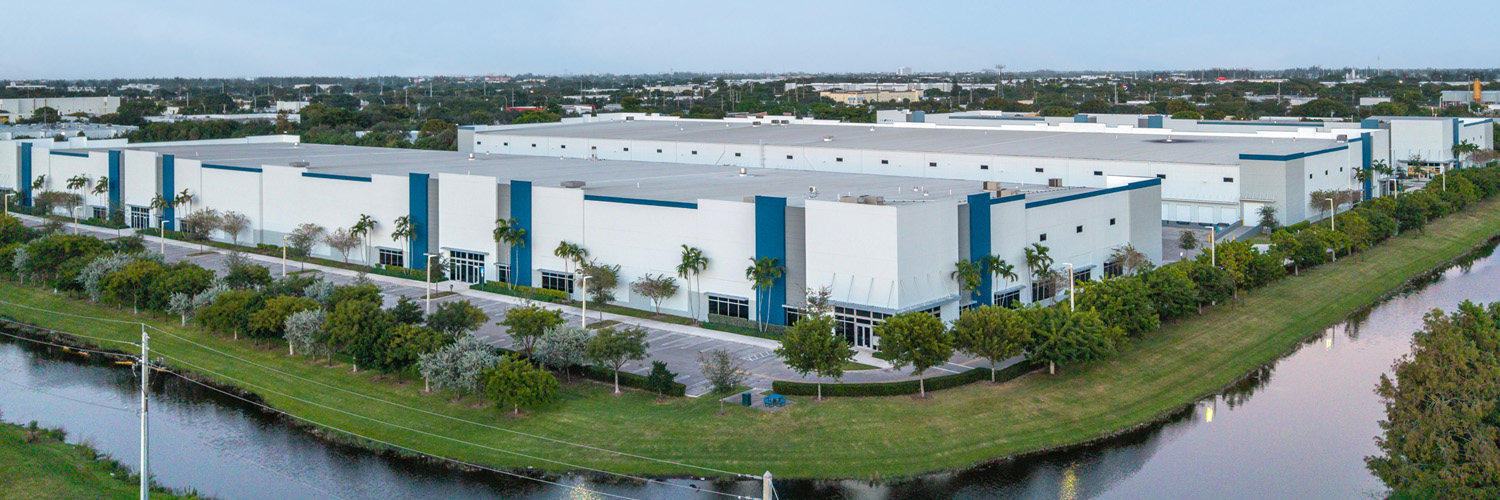
Bridge Point Powerline Portfolio, Pompano Beach, FL

How Is E-Commerce Affecting Demand for Last-Mile Warehouse Space?

Quick answer

E-commerce continues to be the single biggest structural driver of last-mile warehouse demand. Online orders require roughly 3x more distribution space than an equivalent volume of brick-and-mortar sales, according to CBRE, because inventory has to be staged closer to the customer, sorted into small parcels, and set up to handle a much higher rate of returns. With e-commerce now accounting for 16.9% of total U.S. retail sales — up from 11.8% just six years ago, per the U.S. Census Bureau — and new industrial construction at its lowest level since 2019, demand for well-located, infill warehouse space near population centers is outpacing supply, keeping vacancy low and rents rising in last-mile submarkets across the country.

That shift is also changing what occupiers need from their facilities. CenterPoint leaders describe a market in which customers are asking for better-located, more functional buildings; more parking and trailer capacity; and owners who can help them optimize existing networks rather than simply add space. In other words, e-commerce is not only increasing last-mile demand — it is raising the bar for the quality, flexibility, and customer-service model behind that space.

Below, we break down what is driving that demand, what the data shows, and how CenterPoint Properties is positioning its more than 60-million-square-foot national portfolio to serve our diverse customer base.

Key takeaways

• E-commerce fulfillment requires about 3x the warehouse space of traditional retail distribution, per CBRE research.
• E-commerce made up 16.9% of total U.S. retail sales in the first quarter of 2026, according to the Census Bureau — a structural shift that shows no sign of reversing.
• U.S. industrial leasing activity totaled approximately 940 million square feet in 2025, up 12% from 2024 and the second-best year on record after the pandemic-era peak, per CBRE.
• Space under construction fell 12.7% year over year to 220.6 million square feet in the fourth quarter of 2025 — the smallest development pipeline since 2019.
• CenterPoint is responding with infill acquisitions, build-to-suit development, and leasing strategies in port- and population-dense markets, including New York/New Jersey, Southern California, South Florida, Houston, Dallas-Fort Worth, Savannah, Oakland, Seattle, Atlanta, and Chicago.

Why E-commerce eats up more warehouse space than a retail shelf

A store shelf holds a curated, limited assortment of products, and a backroom or regional distribution center replenishes it in bulk. E-commerce works differently: nearly every SKU has to be individually pickable, packable, and shippable directly to a single address, and a meaningful share of what goes out comes back. CBRE has found that e-commerce supply chains typically require about 3x more warehouse and logistics space than a comparable brick-and-mortar model, and that new warehouses have grown both larger and taller to accommodate that shift.

That extra space requirement compounds as online shopping’s share of overall retail spending grows. U.S. retail e-commerce sales hit $326.7 billion in the first quarter of 2026, or 16.9% of total retail sales, up from 16.0% a year earlier and from just 11.8% in the first quarter of 2020, according to the Census Bureau’s Quarterly Retail E-commerce Sales report. Every additional point of penetration translates into more square footage somewhere in the supply chain — and increasingly, that square footage needs to sit close to the end customer rather than on the outskirts of a metro area.

“We’re seeing a lot of our customers really invest more and more into warehouse infrastructure, making their existing space just more and more efficient.”
Ronel Borner, Senior Vice President, Development, East Region, to the Journal of Commerce at TPM26

“After a period of rapid expansion, industrial customers are now optimizing their supply chains. Companies are inventorying their assets, identifying excess capacity, and investing in automation where it drives profitability.”
Matt Mullarkey, CenterPoint’s SVP, Strategic Projects & Planning to NAIOP’s Development Magazine

That customer behavior matters because incremental e-commerce growth does not automatically produce one kind of warehouse requirement. Some users need more sortation capacity; some need more trailer parking; others need structural flexibility, lease flexibility, or a way to modernize existing space without interrupting operations. That is why last-mile demand increasingly favors owners with functional infill assets and the ability to work collaboratively with occupiers as their networks evolve.

Delivery speed is dictating where warehouses sit, not just how many exist

Same-day and next-day delivery have gone from a competitive edge to a baseline consumer expectation. That shift is what has given rise to last-mile industrial real estate — smaller-bay distribution buildings sited in dense, infill locations close to population centers rather than large-format buildings on cheaper, farther-out land. Returns processing adds another layer: online purchases are returned at meaningfully higher rates than in-store purchases, and the reverse-logistics infrastructure needed to handle that volume efficiently is still catching up.

That combination of speed, proximity, and returns has translated into real leasing volume. U.S. industrial leasing totaled roughly 940 million square feet in 2025, up 12% from 2024, making it the second-best year on record behind the pandemic-driven peak of 2021, according to CBRE data cited in a 2026 industrial demand analysis from Link Logistics.

“Instead of expanding at all costs, customers are right-sizing their operations. That does not necessarily mean handing space back, but it does mean being more deliberate about what they hold onto and where they are located.”
Jonathan Guffey, East Region Vice President of Leasing, to Invest: Greater Fort Lauderdale

For last-mile users, that reset often translates into a more selective search: buildings that are closer to customers, easier to staff, better configured for throughput, and able to support a mix of direct-to-consumer, retail replenishment, returns, and 3PL activity.

Supply is not keeping pace, and that is tightening the market further

Demand is only half the story. Available land for new infill development is scarce, and what land does exist is increasingly being bid away by data centers and residential developers who can pay more for it than an industrial user can. New construction starts are near decade lows as a result: space under construction fell 12.7% year over year to 220.6 million square feet in the fourth quarter of 2025, the smallest pipeline since 2019.

The effect is most visible in small-bay and infill submarkets, where vacancy has stayed roughly 3.4% to 4.2% nationally — well below the 5% to 7% range typical of larger bulk-distribution product — even as overall industrial vacancy has ticked up modestly on the back of a wave of older-building move-outs. Moody’s Analytics projects industrial rents will grow about 3% in 2026, the strongest outlook of any commercial property type, a dynamic driven in large part by the imbalance between last-mile demand and infill supply, as outlined in a recent industrial real estate market overview.

“Generally speaking, relative to a historical perspective, the industrial market in the United States is still on solid footing. Fundamentally, we are not on a par with 2020 to 2022, but what we’ve been doing over the past three years is adjusting back to a more traditional environment.”
Jeff Thornton, Executive Vice President, Head of Central Region, to Connect CRE

That “more traditional environment” is not a retreat from last-mile fundamentals. It is a more disciplined operating climate in which asset quality, location specificity, and tenant fit matter more. For occupiers, that means waiting for perfect conditions can narrow the field; for investors, it means infill properties with true functional advantages can continue to stand apart from the broader industrial average.

How CenterPoint is positioning its portfolio for the last-mile era

CenterPoint’s investment strategy has long centered on being close to ports, close to population, and equipped with the parking and trailer-storage capacity that high-throughput e-commerce and third-party logistics tenants need. That strategy shows up across the company’s 61.3-million-square-foot, 301-building portfolio, which spans the West, Central, and East Regions and serves 377 tenants nationwide.

“What we’ve really been trying to do at CenterPoint is build our portfolio around optionality. We offer buildings with rail, we have some transload buildings, and high-velocity buildings — giving our clients the most optionality for how they want to operate.”
Ronel Borner, East Region SVP of Development, to the Journal of Commerce at TPM26

“CenterPoint is zeroing in on Class A investment opportunities coast-to-coast, especially when they offer our customers very hard-to-find and hard-to-replicate competitive advantages.“
Rives Nolen, CenterPoint’s Central Region SVP of Investments, said about the acquisitions of two facilities in Houston’s South Belt

Examples of that strategy include:

• New York/New Jersey: CenterPoint’s East Region team recently completed a two-story, Class A build-to-suit distribution facility at 65 Rason Road in Inwood, New York, 2 miles from JFK Airport — a multistory design suited to the tight land constraints of the New York market. Long Island Business News recognized the project as a top regional private project in 20925. It is part of CenterPoint’s broader New York/New Jersey push that has included acquisitions in the Bronx, Brooklyn, and continued scouting in Queens.

• South Florida: CenterPoint’s South Florida portfolio continues to benefit from limited land, population growth, port connectivity, and users seeking modern, flexible buildings. Guffey has emphasized that tight conditions require a long-term partner mindset: starting discussions early, listening carefully, and balancing appropriate returns with durable customer and broker relationships.

• Houston and Texas: CenterPoint’s Central Region, led by Jeff Thornton, spans Chicago, Houston, Dallas, Austin, and San Antonio. Thornton has pointed to Texas markets’ continued positive net absorption and rent growth during a period of national uncertainty, underscoring how market-level fundamentals can diverge from national averages.

• Oakland and the West Coast. CenterPoint Landing at the Port of Oakland gave the company a near-dock facility built to serve tenants that need direct access to a major seaport, complementing its long-standing presence in the South Bay and Inland Empire submarkets of Southern California.

Savannah and port-centric growth: Borner has emphasized the connection between port activity and logistics demand, noting that where ports are investing in throughput and infrastructure, CenterPoint wants to grow alongside them and help customers respond to expanding cargo flows.

In South Florida, CenterPoint’s investment team framed newer, flexible Broward County assets as a fit for users seeking modern space in a highly competitive, land-constrained market.

“These are highly efficient, modern facilities that give our tenants the right amount of space and the access they need to stay competitive in their industries.”
Roy Rosenbaum, East Region Senior Vice President of Investments, said of CenterPoint’s Q1 2026 investment in a three-building Class A portfolio in South Florida

“Broward County is one of our favorite infill markets to target nationally because it’s so challenging to build here and land constrained, making it one of the country’s most competitive landscapes.”
Bryan Won, East Region Vice President of Investments
What this means for retailers, 3PLs, and investors

• Expect a flight to quality. With infill land scarce, occupiers that wait to secure space are increasingly limited to older, functionally obsolete buildings; tenants who move early have more options.
• Parking and trailer storage matter as much as square footage. High-velocity e-commerce and 3PL operations depend on outdoor storage capacity for trailers and delivery fleets — a feature often harder to find than warehouse space itself in dense markets.
• Build-to-suit is becoming a primary path to infill space. In the tightest submarkets, existing inventory may not meet the needs of customers that require modern clear heights, circulation, parking, power, or specialized site design.
• Location specificity matters more than sector-wide averages. A last-mile property in a supply-constrained infill submarket behaves very differently than a bulk warehouse in an exurban market where new construction is easier.
• Relationships are becoming part of the real estate solution. As Guffey noted, durable customer and broker relationships help occupiers navigate higher rents, operating costs, and network resets; as Borner noted, lease structure and collaboration can help customers make efficiency investments inside existing buildings.

Frequently asked questions

What is last-mile warehouse space?
Last-mile industrial real estate refers to distribution facilities located close to end consumers — typically smaller-bay buildings in dense, infill locations — that support fast, localized order fulfillment rather than long-haul, bulk distribution.

How much more warehouse space does e-commerce require compared with traditional retail?
CBRE research indicates e-commerce supply chains typically require about 3 times more warehouse and logistics space than a comparable brick-and-mortar retail model, largely due to the need for individualized picking, packing, and returns processing.

What share of U.S. retail sales is e-commerce today?
E-commerce accounted for 16.9% of total U.S. retail sales in the first quarter of 2026, according to the Census Bureau — up from 11.8% in the first quarter of 2020.

Is last-mile warehouse space getting harder to find?
Yes. Small-bay and infill vacancy has stayed in the roughly 3.4% to 4.2% range nationally, well below broader industrial vacancy, as new construction starts remain near decade lows and infill land faces competition from data center and residential development.

Where is CenterPoint investing in last-mile industrial space?
CenterPoint’s regional teams are active in port- and population-dense markets across the West, Central, and East Regions, including recent development projects and acquisitions in New York/New Jersey, South Florida, Houston, Savannah, Chicago, and the Oakland/Bay Area, among others. Current leasing opportunities are listed at centerpoint.com/properties.