



Press

CenterPoint Properties Names Brian Moran New West Region Development SVP
Search Site
Back to Menu
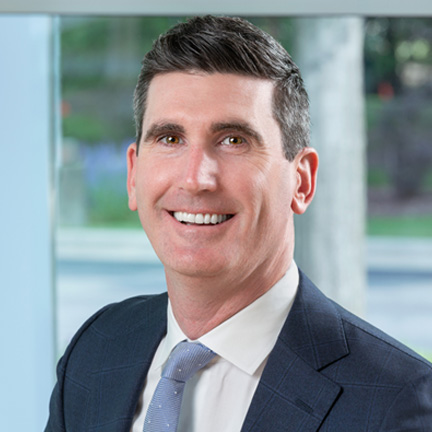
"CenterPoint typically seeks out well-located, infill, logistics-oriented real estate. We’ve got a strong portfolio in the South Bay and the L.A. markets. I would say going forward, it’s probably more focused on Class A."
- Pete Williams, SVP of Investments, West Region, on how his team's playbook has evolved in the past two years.
CenterPoint's West Region SVP of Investments, Pete Williams, was featured during the “Industrial Capital Market Trends to Watch" session at NAIOP's 2026 I.CON West conference.
Read what Pete and Ryan Collins, executive vice president, EastGroup Properties, Brian Russell, executive vice president, CBRE, and Tucker Wincele, managing director, Invesco, and Newmark’s Executive Managing Director, Andrew Briner, had to say about the challenges investors are facing, such as interest rate and tariff uncertainty, and where they’re finding opportunities, and how their strategies have evolved in recent years.
“Industrial capital markets have clearly moved out of the zero cap rate environment that defined the last cycle. Today, we’re operating in a more disciplined market. Capital costs are higher. Leasing fundamentals have moderated, and investors are being forced to price risk much more carefully,” said Andrew Briner, executive managing director, Newmark, setting the scene for a panel discussion on industrial capital markets at NAIOP’s I.CON West this week.
“What makes today’s discussion particularly valuable is the range of capital perspectives we have on stage, from public REIT to pension fund capital to large equity fund capital, along with real-time market intelligence from the brokerage frontlines,” Briner said.
“We’re still looking at development sites in all our core markets,” said Collins, naming Phoenix, Tampa and Dallas as high-growth markets in focus. “I’d say for us, the opportunity lies in continuing to find sites to help increase our development pipeline.”
“I think we’ve got a lot of conviction for anything with an advanced manufacturing orientation to it right now,” said Williams, “So we’ve been most active in the Bay area, the South 880 corridor. There’s a lot of momentum down here in Southern California with aerospace and defense that we’re monitoring pretty closely.”
“There’s limited core capital out in the market, and I think there’s a lot of really good product you can get at or below replacement cost,” said Russell. “Vacancies are starting to tighten up… I think we’re all time low in the [U.S.] construction pipeline over the last 14 or 15 years. So those trend lines are telling you things are going to start to move in the right direction on the rent side.”
“One of the biggest things that we continue to encounter is a pretty wide bid-ask spread,” said Williams. “It feels like institutions have been gradually marking assets down quarter over quarter and doesn’t feel like it’s truly caught up with where the market is.”
“Most investment professionals are big believers in the long-term performance and demand drivers of Southern California,” said Wincele. “That being said, the data is not super encouraging.”
Collins agreed. “On the positive side, supply is at a record low, so I don’t think it’s going to take much on the demand side to get things really going again in L.A.”
“I think we’re going to see pricing start to point in a positive direction,” said Russell. “The other piece – outside of the local fundamentals – is the liquidity and the debt markets. There’s a lot of debt capital; I think equities are starting to catch up. There are enough bright spots in the fundamentals that if you want to place a bet, you can make a pretty good argument.”
CenterPoint typically seeks out well-located, infill, logistics-oriented real estate, Williams said. “We’ve got a strong portfolio in the South Bay and the L.A. markets. I would say going forward it’s probably less of a focus on that; it’s probably more focused on Class A.” The company is looking to expand into markets like the Inland Empire or Phoenix.
“Sounds like we’ve got similar strategies,” said Collins with a laugh. “I’d say back in 2021, we were doing more forward deals. We were looking at vacant buildings. We haven’t really been focused on those types of deals anymore.”
“I think we’re probably not likely to take on an investment that’s got significant leasing risk right now, especially in a market like L.A. or the Bay Area, at least until the fundamentals have improved,” he added.
“For us, it goes back to just having a long-term perspective,” said Collins, adding that while they might underwrite market rents more conservatively, they believe in the infill submarkets that they’re in long term.
“We’re not super sensitive to interest rate movements,” Williams agreed. “Generally speaking, we’ve gotten more conservative in our underwriting. We are significantly more sensitive to underwriting deals with vacancy or lease-up risk or credit risk, so it probably drives our asset selection in terms of what we really want to chase more so than individual underwriting assumptions,” he explained.
“We’re real estate investors, not macroeconomic forecasters,” said Wincele, adding that swings in the 10-year Treasury or headlines on political or geopolitical events by and large don’t affect their day-to-day. (With the caveat that “Liberation Day” – when President Donald Trump announced tariffs on April 5, 2025 – was an exception, as “everyone hit pause.”)
“When you talk about something like tariffs, we’ve got a portfolio that’s got a tremendous amount of port exposure,” said Williams. “As we look forward, we look to diversify that a little bit as supply chains get more complicated.”
For CenterPoint Investment, Development, and Asset Management inquiries in the West Region, please contact:
Subscribe
Microsite Request